
Tianjin Xingrong Metal Products Co., LTD
Contact: Wang Rong
Tel: 13920512163
Email: 2317091700@qq.com
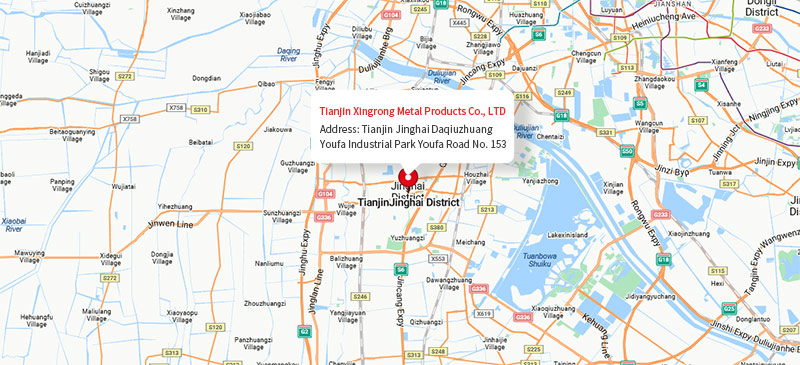
Address: Tianjin Jinghai Daqiuzhuang Youfa Industrial Park Youfa Road No. 153
ContactCONTACT us
Product classification
Zinc aluminum magnesium
2025-01-10
Zinc aluminum magnesium and hot-dip galvanized standard difference
3 steps
Refer to
2
Paper summary
Analyze the problem
2 articles are cited for reference
1. What are the differences between hot dip galvanized and zinc aluminum magnesium?
The Penguin
2. The difference between zinc aluminum magnesium and hot dip galvanized photovoltaic bracket - building materials know - there is a product number
www.youfagt.cn
Summarize the answer
Zinc aluminum magnesium and hot dip galvanizing are two different metal anti-corrosion coating technologies, they have some differences in composition, production process, anti-corrosion performance, application characteristics and environmental protection.
Ingredients:
Hot dip galvanizing: The steel bracket after cleaning and activation is immersed in the molten zinc liquid to form a zinc alloy coating with good adhesion on its surface.
Zinc aluminum magnesium: On the basis of which a certain amount of AI and Mg molecules should be added to form zinc aluminum magnesium photovoltaic scaffold2.
Production process:
Hot-dip galvanizing: It is necessary to first make the steel bracket and then immerse it in the zinc liquid for a secondary process.
Zinc aluminum magnesium: The steel strip coated with zinc aluminum magnesium is directly used to make the bracket, eliminating the secondary process step 2.
Corrosion resistance:
Hot dip galvanizing: corrosion resistance and damage resistance is strong, but its coating is thick, easy to peel and fall off.
Zinc aluminum magnesium: the coating is denser, it is not easy to peel and fall off, and the corrosion resistance and damage resistance are stronger. And because the coating of zinc, aluminum and magnesium is thinner, the quality of zinc-aluminum and magnesium materials is lighter and simpler than that of hot-dip galvanized materials for photovoltaic brackets of the same specifications.
Application features:
Hot dip galvanizing: drilling and cutting need to be completed when it is still a steel support, because the later cutting and drilling will destroy the formed galvanized layer, if not secondary treatment in the use of the process prone to rust.
Zinc aluminum magnesium: In the process of use can be cut and punched, because in wet weather, the dense protective film near the zinc aluminum magnesium incision can continuously infect and migrate to the incision metal, thereby reducing the degree of corrosion, so the zinc aluminum magnesium bracket can be punched and cut at will.
Environmental protection:
Hot dip galvanizing: The process will produce a lot of waste water and waste gas, which has a certain impact on the environment.
Zinc aluminum magnesium: Less waste water and waste gas are generated in the production process, and it has better environmental performances.1
Cost:
Hot dip galvanizing: relatively economical, low cost, suitable for general anti-corrosion needs.
Zinc aluminum magnesium: Due to the use of more alloying elements, the cost is relatively high, and it is suitable for fields with higher requirements for corrosion resistance.
In SUMMARY:
Zinc-aluminum-magnesium and hot-dip galvanizing have significant differences in corrosion resistance, service life, ease of processing, automatic repair ability and environmental protection. Zinc aluminum magnesium has stronger corrosion resistance and longer service life, while it is more convenient in the process of processing and use, and has better environmental performance. However, due to its high cost, it is usually suitable for occasions with higher requirements for anti-corrosion performance. Hot-dip galvanizing is an economical anticorrosion method, suitable for general anticorrosion needs, but in terms of environmental protection and processing convenience is slightly inferior to zinc, aluminum and magnesium.